How to sell mahjong lessons on Shopify (and what to charge)
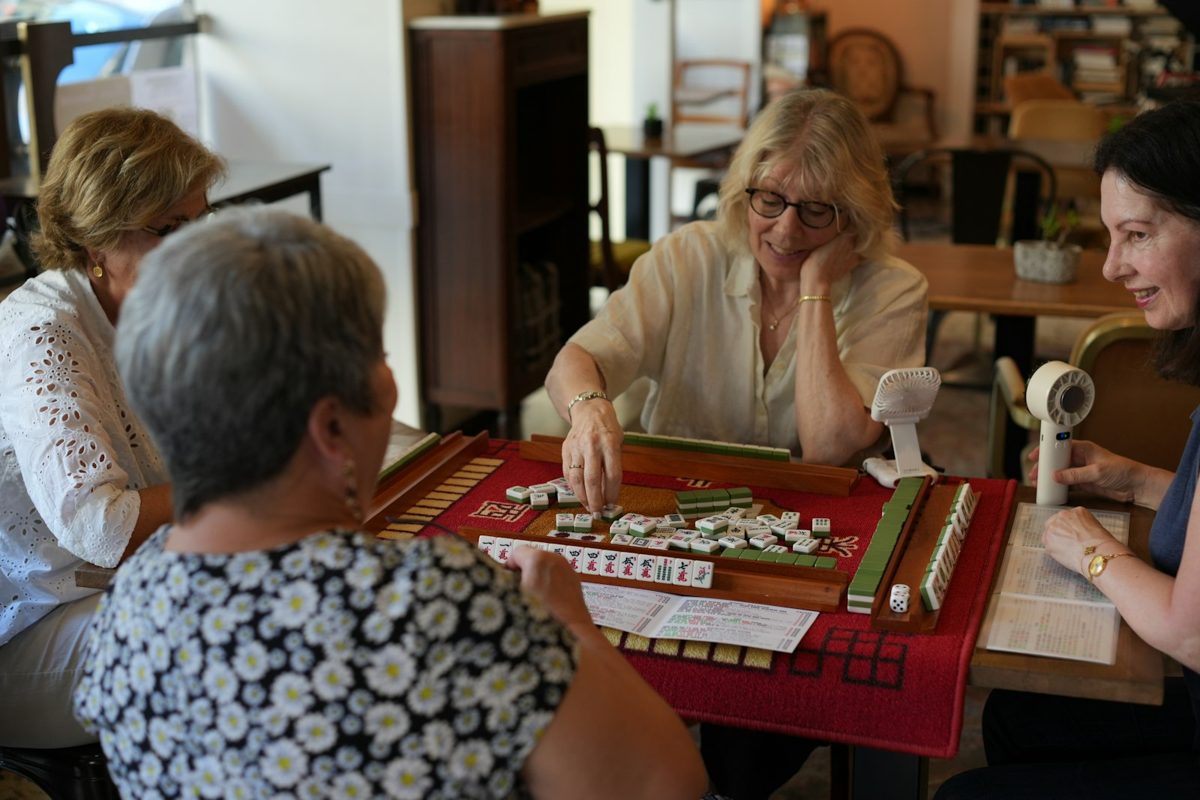
Mahjong lessons, open play and leagues are selling out across the US, and many teachers already run a Shopify store for sets, cards and accessories. This guide covers what to offer, what other teachers charge, and how to sell seats in the same store without a sign-up sheet.
Short answer: a beginner lesson (Mahjong 101, about two hours) usually sells for $60 to $75 per person, open play for $15 to $25 a seat, and a 4-week league for about $100. On Shopify, sell each lesson date with a fixed number of seats (four per table) and take payment at booking. A product per date works for a few classes; a booking app saves time once you run weekly open play, courses and leagues. (Prices from 155 lesson, open play and league listings on 14 US mahjong teachers' Shopify stores, checked November 19, 2026.)
What mahjong teachers sell
Most teachers sell more than one kind of session. Each one brings in a different kind of player:
- Beginner lessons (101, 102). The way in for new players, usually two hours with sets and cards provided. Often sold as a 2- or 3-lesson pack.
- Guided play. Players who know the rules play real games while the teacher coaches. The step between lessons and open play.
- Open play. Players book a seat and play for two hours, often at a café, bar or bookstore. Cheap, social and the best way to keep students coming back.
- Leagues. A set group playing once a week for 3 to 4 weeks, with scores. Regular income you can count on.
- Private lessons and parties. One-on-one lessons, birthday and bachelorette parties, corporate events, a lesson at someone's home.
- Memberships. A yearly or monthly fee for member prices or guest passes.
- Sets, cards and accessories sold in the same store, next to the lessons.
How much to charge for mahjong lessons
| What you sell | Typical price | Range we saw |
|---|---|---|
| Mahjong 101, one beginner lesson (2–2.5 h) | $60 – $75 per person | $30 – $80 |
| 101 + 102 pack (2 lessons) | $100 | $55 – $125 |
| 3-lesson starter series | $125 – $165 | up to $285 in the student's home |
| Guided play | $35 – $70 | $20 – $75 |
| Open play (2 h) | $15 – $25 a seat | free at some bars, $8 for members, up to $65 with food or a craft |
| League, 4 weeks | about $100, or $25 a week | $75 – $165 |
| Private lesson, one-on-one | $77 – $125 | virtual lessons around $100 |
| Private party or group event | about $400 | up to $720 |
| Membership | $65 – $250 a year |
Source: TrenoxaHQ's check of 155 public listings on 14 US mahjong teachers' Shopify stores (Florida, California, Illinois, South Carolina, Connecticut, Indiana and others), November 19, 2026. American mahjong, prices per person unless noted.
What moves the price up or down:
- Your area. Lessons in Los Angeles and Chicago's North Shore sit at the top of the range; smaller towns are closer to $40 – $50.
- The venue. A café or brewery that hosts for free (because players buy drinks) keeps open play at $10 – $20. Renting a room pushes it up.
- What's included. Food, a drink, a craft or a take-home card justify $45 – $105 sessions.
- Group size. Small groups of four with one teacher cost more per person than a room of five tables.
Work out your own price per seat
Start from the cost of one session and divide by the seats you expect to fill, not the seats you have:
- Add up the session's costs: venue, your time (including setup and travel), and wear on sets and cards. For example: $40 venue + $80 for your time + $10 sets and cards = $130.
- Pick the seats you expect to sell. Tables seat four, so plan in fours. With 3 tables (12 seats), plan on about 9 paid.
- Divide: $130 ÷ 9 = about $15 a seat to break even. Price above that and check it against the table above.
- Set a minimum. Decide how many seats you need to run (for example 6) and say on the listing what happens if a date doesn't fill: move to another date or full refund.
For lessons, students pay for teaching, not just a seat. Most teachers keep beginner classes to 8 – 12 people (2 – 3 tables) and charge $60 – $75 for that attention.
Selling mahjong lessons on Shopify
Shopify has no built-in booking, but there are three ways to sell lesson seats.
Option 1: a product per date
Create a product called "Mahjong 101 – December 3" and set its stock to the number of seats, for example 12. Shopify stops selling at zero. It's free and works for a handful of classes.
Where it breaks: you create a new product for every date, past dates stay in your store until you remove them, and multi-week courses and leagues become several products. Many mahjong stores we checked had a long list like "Mahjong 101 Class 11/13", "…11/20", "…11/24", plus $0 "waitlist ticket" products.
Option 2: one product, dates as variants
One product "Mahjong 101" with a variant per date, each with its own stock. Tidier, but you still delete old variants by hand, and a course that covers four dates doesn't fit as one variant.
Option 3: a class booking app
A class booking app adds dates, seats and a calendar to a product and keeps the counts for you. Look for:
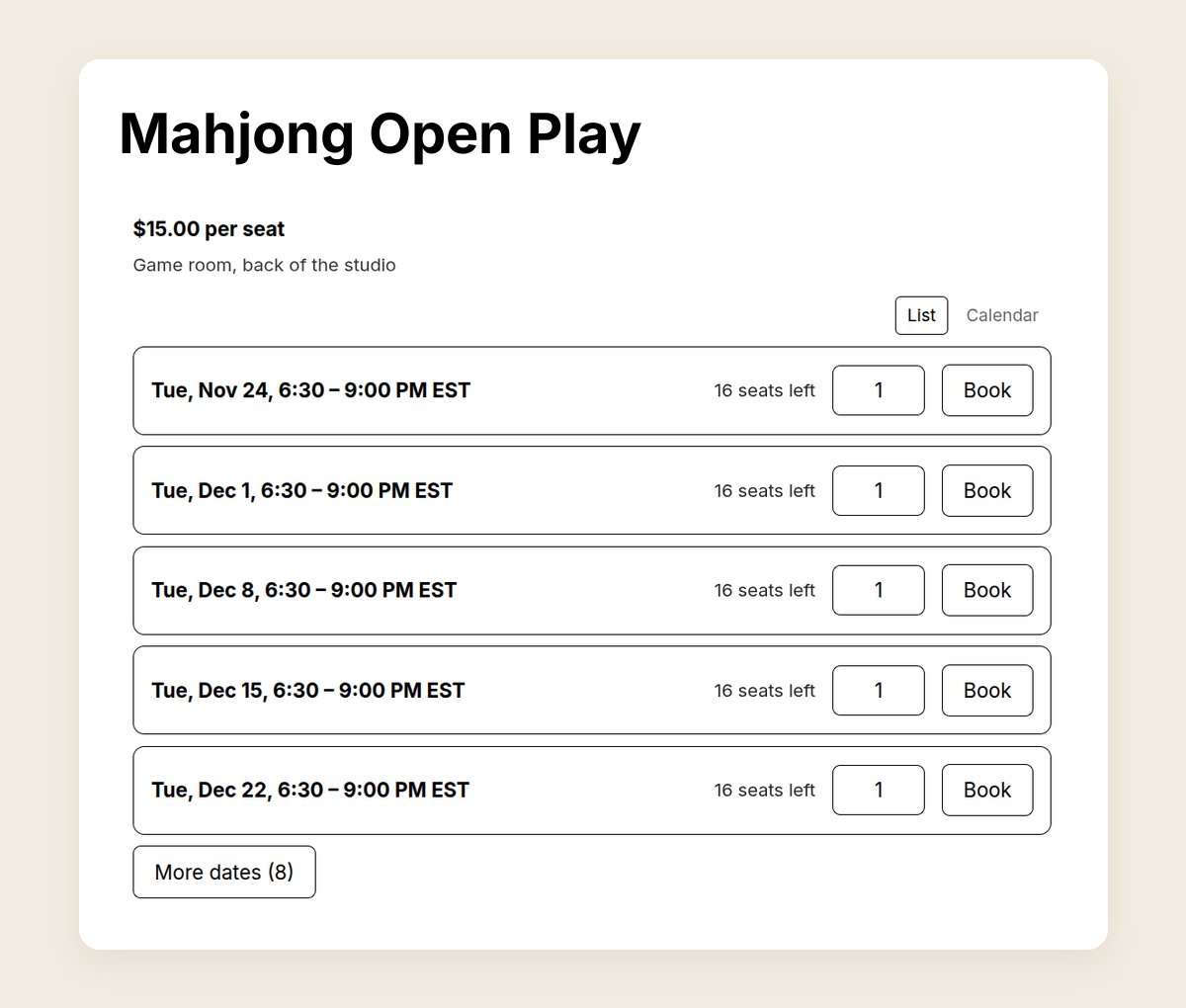
- Seats per date that stop at checkout, even when two people buy the last seat at once.
- Courses as one booking: a 4-week league or a 101 + 102 pack sold once, for all its dates.
- Weekly schedules for open play, so you don't add every Tuesday by hand.
- Past dates removed on their own.
- A list per date of who booked, to seat tables before people arrive.
Trenoxa Bookings is built for this: free for one class, seats per date, courses, weekly schedules and private group requests. To be fair, it counts seats, not tables, and doesn't send reminders or run a waitlist. Other options are compared in Best Shopify booking apps for classes and workshops, and you can try a demo mahjong store.
Setting up each kind of session
- Open play: one class with a weekly schedule, 4 seats per table (16 seats for 4 tables). Add the venue and time to the title so it reads well on social media: "Open Play at The Parlor – Tuesdays 6 pm".
- Beginner course: sell 101 + 102 (or a 3-week series) as one course with one price, so students commit to all of it. Keep the single 101 lesson too, for people who want to try first.
- League: a course with the league dates, at the 4-week price. If you allow drop-ins, add a single-week product at a higher per-week price (one teacher charges $95 a week against $250 for three).
- Private lessons and parties: a fixed-price product for one-on-one lessons, and a request form or "ask for a date" option for groups, so you can agree the date before they pay.
- Sets and cards: keep them in the same store and link them from the lesson page. A new student often buys a card or a set after the first lesson.
Getting your first students
- Partner with a venue. Cafés, wine bars, breweries and bookstores host open play for free or for a drink minimum. Their customers become your students.
- Libraries and community centres often book paid or free beginner sessions. Good for reaching people who've never played.
- One clear booking link. Put it in your Instagram bio, Facebook groups and on a flyer with a QR code (Shopify has a free QR code generator). Players should be able to book without messaging you.
- Turn open play into leagues. Regulars at open play are your league players; mention the next league at every session.
- Themed nights. Holiday open play, "Mahj and Margs", a mother's day session with a craft. These sell out and bring new people.
Before you open the first date
- Say what's included: sets, cards, food, drink.
- Say the level: true beginners, knows the card, or any level.
- Write your refund and transfer rule on the listing (for example: full refund up to 48 hours before, then credit for another date).
- Add the venue address and what to bring to Shopify's order confirmation email (Settings → Notifications), so the confirmation works as the booking confirmation.
- Keep the number of seats a multiple of four.
Questions people ask
How much should I charge for mahjong lessons?
Most US teachers charge $60 to $75 per person for a two-hour beginner lesson (Mahjong 101), about $100 for a 101 + 102 pack, and $77 to $125 for a one-on-one lesson. Smaller towns sit closer to $40 to $50.
How much does mahjong open play cost?
Usually $15 to $25 a seat for two hours. Some bars host it free because players buy drinks; sessions with food or a craft run $45 and up.
How much is a mahjong league?
About $100 for four weeks, or $25 a week. Three-week leagues in big cities run $180 to $275.
Can I sell mahjong lessons on Shopify?
Yes. Use a product per date with stock as seats for a few classes, or a class booking app for weekly open play, courses and leagues. Payment is taken at checkout when players book.
Do I need a certification to teach mahjong?
No. Teacher training and certification programs exist and can help with teaching skills and credibility, but no certification is required to teach or sell lessons.
Selling mahjong lessons on Shopify?
Install Trenoxa Bookings (free for one class), or send us your open play, lesson and league dates and we set them up for you, free.
By class type: pottery · painting · cooking · craft workshops. Comparing apps? See what each booking app would cost for your classes.
More guides on this topic
- Workshop calendar 2027: dates and class ideas for every month
- How to run and sell a Christmas wreath workshop on Shopify
- Demo: a Christmas wreath workshop set up in Trenoxa Bookings
- Eventbrite or Shopify for your workshops?
- How to sell needlepoint classes on Shopify (and what to charge)
- How to email your class students on Shopify: date notes and new-class announcements
- ClassBento vs Eventbrite vs your own Shopify store for classes (2026)
- From a paper sign-up sheet to online class bookings: what changes
- Best Shopify booking apps for classes and workshops (2026)
- Does Shopify have a booking system? Which kind of booking app you need
- Shopify events calendar and event registration: paid and free events
- Can you sell event tickets on Shopify? Classes, workshops and small events
- How to sell classes and workshops on Shopify without overbooking